

On August 18, the Inaugural Ceremony of the Tactile AI‑Empowered Joint Research Center and the 1st Academic Committee Meeting was held at Tsinghua‑Shenzhen International Graduate School (hereinafter referred to as Tsinghua SIGS). Hosted by the Institute of Biomedicine and Health Engineering (iBHE) at Tsinghua SIGS, the event was attended by Guan Tian, Deputy Party Secretary of Tsinghua SIGS; He Yonghong, Party Branch Secretary of iBHE; Chen Xiaodong, Dean of iBHE; and Xing Xinhui, Ma Shaohua and He Honghui, Vice Deans of iBHE. Academicians and experts from top‑tier domestic universities, research institutes and enterprises gathered to witness the official launch of the Joint Research Center and conduct in‑depth discussions on cutting‑edge Tactile AI research as well as the medium‑ and long‑term development roadmap of the Center.
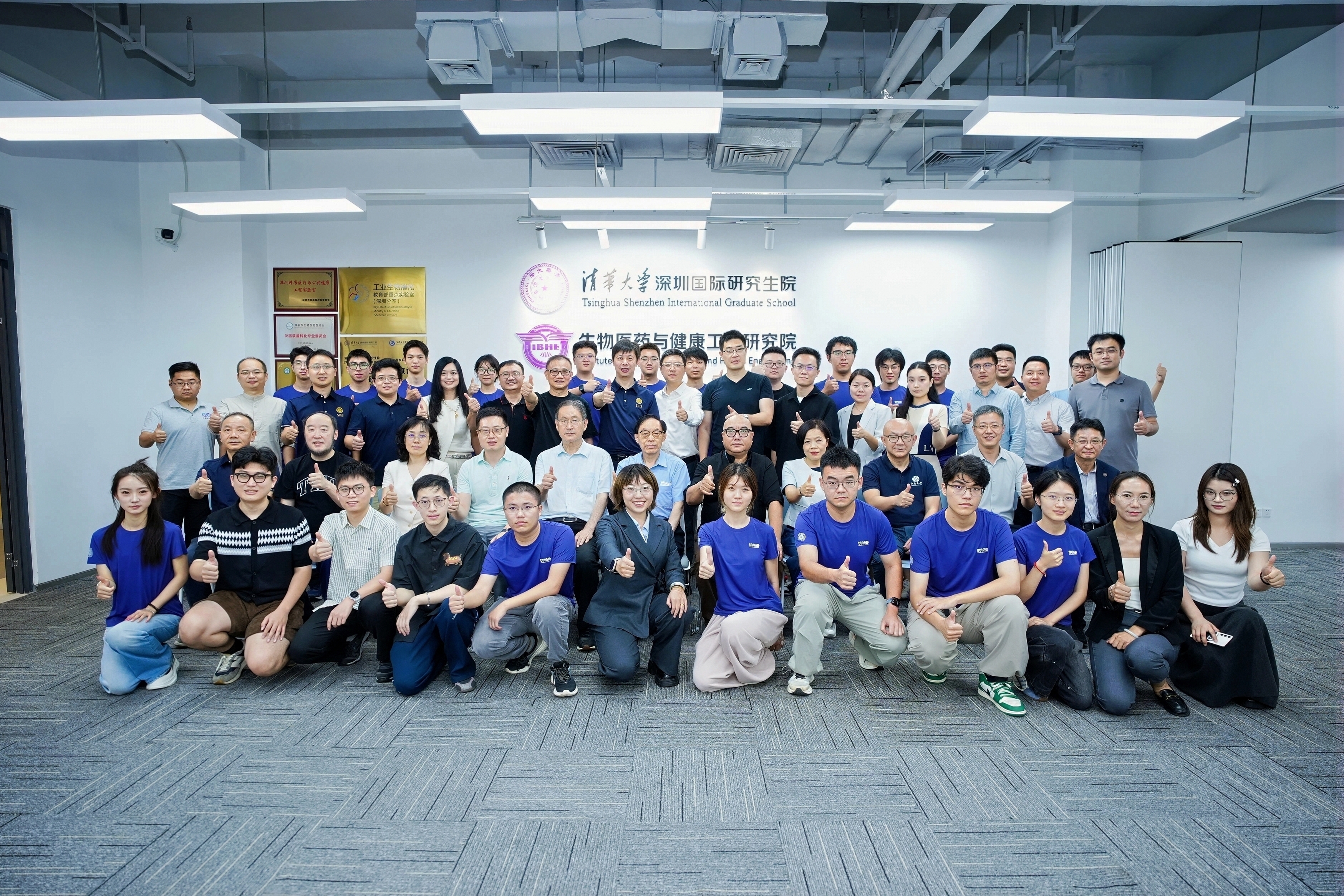
Photo: Event venue
Jointly established by Tsinghua‑Shenzhen International Graduate School and Hangzhou Folian Advanced Materials Co., Ltd., the Tactile AI‑Empowered Joint Research Center operates under the auspices of iBHE. Centering on cutting‑edge research areas including tactile intelligence and iontronic sensing, brain‑computer interfaces and embodied intelligence, as well as intelligent medical devices, the Center aims to advance fundamental theoretical research, tackle key core technical challenges, and accelerate the translation and application of research outcomes in Tactile AI through university‑enterprise collaborative innovation. It strives to build an internationally influential innovation platform integrating industry, academia and research.
Guan Tian, Deputy Party Secretary of Tsinghua SIGS, delivered an address. He noted that Tactile AI has become a vital innovation frontier at the intersection of artificial intelligence and biomedical engineering. He expressed hopes that the Joint Research Center would adhere to the “Four Orientations”, respond to major national strategic needs, deepen industry‑academia‑research integration, foster high‑caliber talents, and build an internationally competitive innovation platform.
Wang Xiaoyang, Chairman of TIDeep Technology, delivered a speech on behalf of the enterprise partner. He stated that the enterprise would give full play to its strengths in industrialization and engineering, and work alongside Tsinghua SIGS to advance basic theoretical research, overcome core technical bottlenecks, and facilitate the translation of Tactile AI achievements, jointly setting a benchmark for university‑enterprise innovation cooperation.
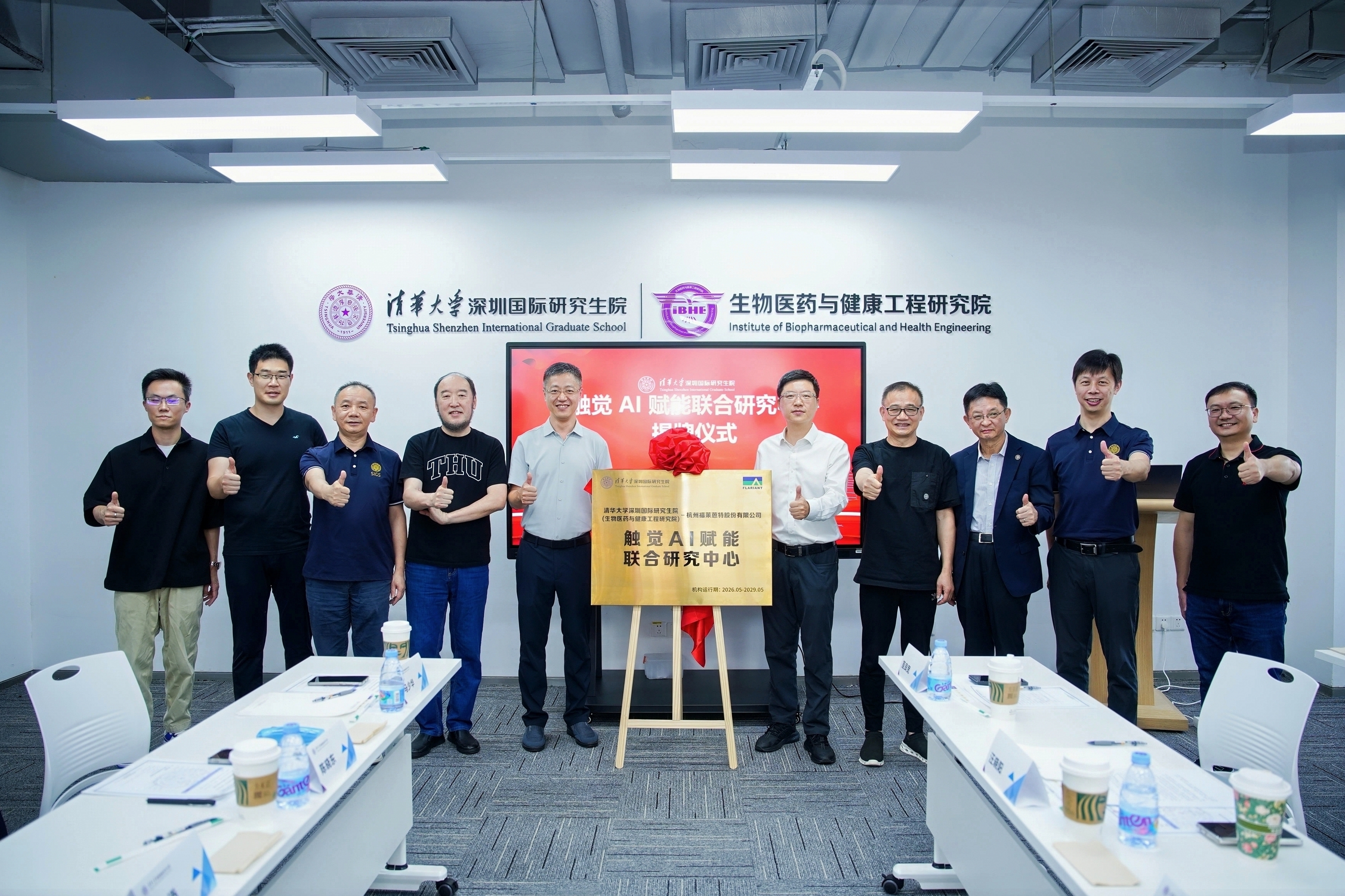
Photo: Unveiling Ceremony
At the unveiling ceremony, representatives from both sides jointly unveiled the plaque for the Tactile AI‑Empowered Joint Research Center, marking a new phase of university‑enterprise collaboration in tactile intelligence and biomedical engineering.
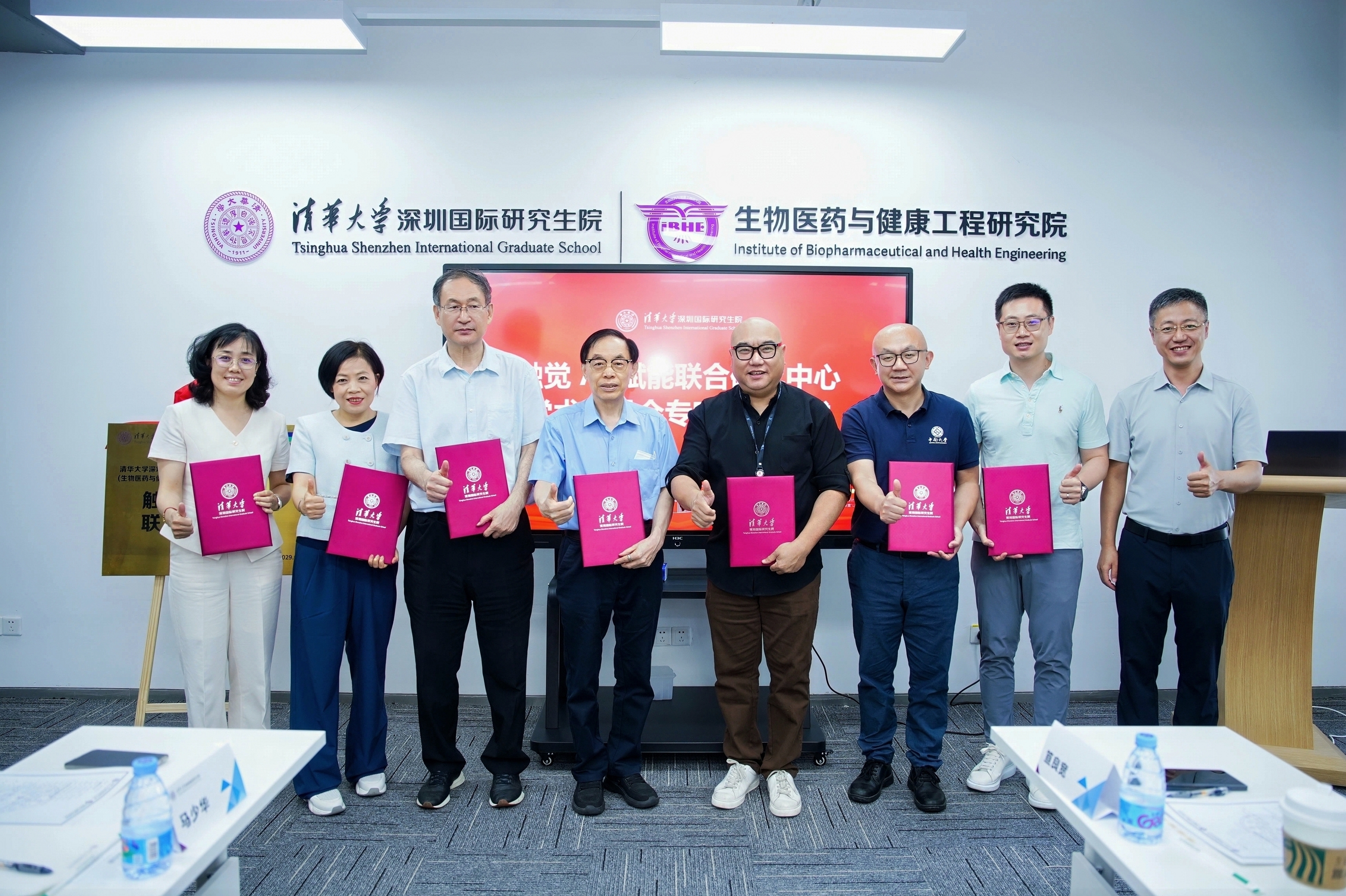
Photo: Group photo of the Academic Committee
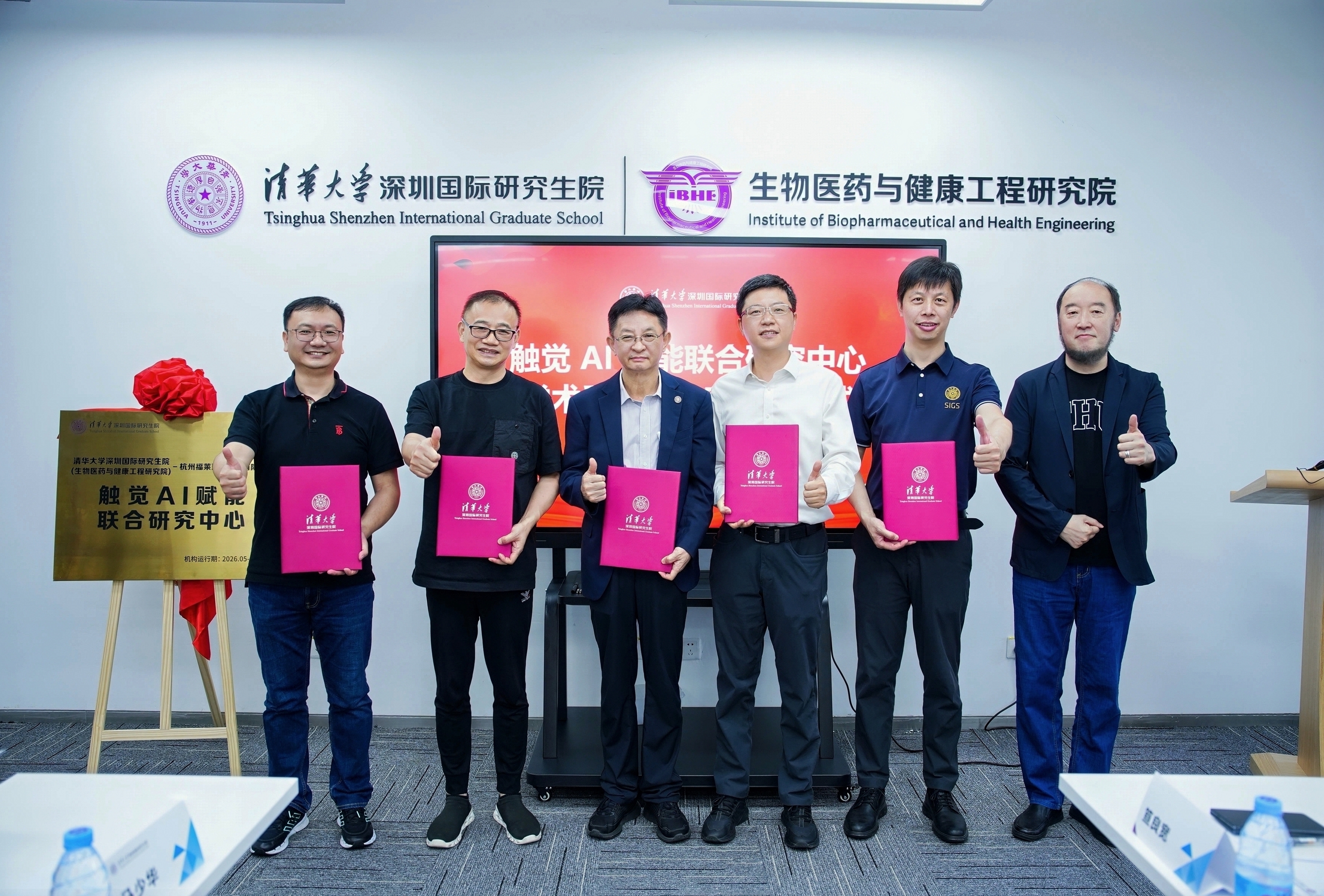
Photo: Group photo of the Management Committee
An expert appointment ceremony followed. Guan Tian presented appointment letters to the Chief Scientific Advisors and members of the Academic Committee, as well as members of the Joint Research Center Management Committee.
Academician Xu Weilin from Wuhan Textile University, Academician Li Chenzhong from The Chinese University of Hong Kong, Shenzhen, Academician Zhang Yuanting from The Chinese University of Hong Kong, and Professor Zhang Ming from The Hong Kong Polytechnic University were appointed Chief Scientific Advisors to the Academic Committee.
Professor Li Xuejun from Xiangya School of Medicine, Central South University, Professor Yu Xinge from City University of Hong Kong, Professor Yang Fang from Southeast University, and Professor Luo Qian from Shenzhen Institute of Advanced Technology, Chinese Academy of Sciences were appointed members of the Academic Committee, providing strategic consultation and academic guidance for the Center’s development.
Meanwhile, Professor Xing Xinhui of iBHE was appointed Director of the Joint Research Center Management Committee; Professor Pan Tingrui was appointed Director of the Joint Research Center. Wang Xiaoyang and Da Liangkuan from TIDeep Technology were appointed members of the Management Committee, and Wang Zhenyan was appointed Deputy Director of the Joint Research Center. They will jointly promote the Center’s construction and operation, resource integration, and research translation.
During the academic presentation session, Professor Pan Tingrui, Director of the Joint Research Center, and his team presented the latest research progress and future plans covering Tactile AI, biomedical sensing and intelligent medical devices, showcasing innovative achievements in both fundamental research and industrial applications.
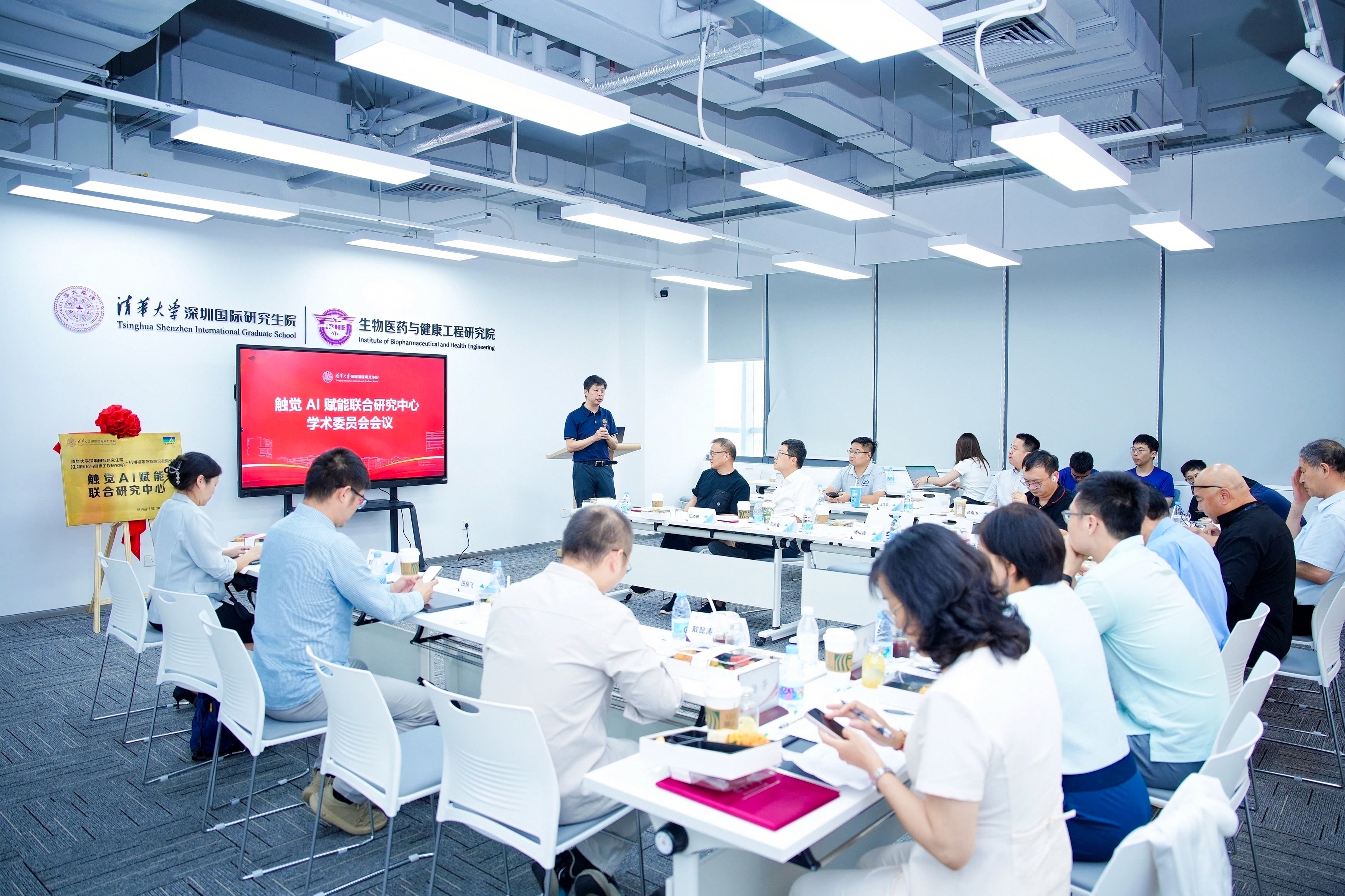
Photo: Academic Committee Meeting
The 1st Academic Committee Meeting was subsequently convened, where participating experts held in‑depth deliberations on the future development of the Joint Research Center. Taking into account development trends in brain science, brain engineering, Tactile AI, embodied intelligence and the large‑health industry, experts put forward constructive suggestions regarding disciplinary layout, platform development pathways, talent training systems and talent recruitment mechanisms. Experts recommended that the Center focus on frontiers such as brain‑computer interfaces, tactile intelligence and embodied intelligence, strengthen interdisciplinary integration and industry‑academia‑research collaboration, explore innovative training models including Shenzhen‑Hong Kong joint training and professional Master‑Doctorate programs in engineering, and build a high‑level, open‑access innovation platform.
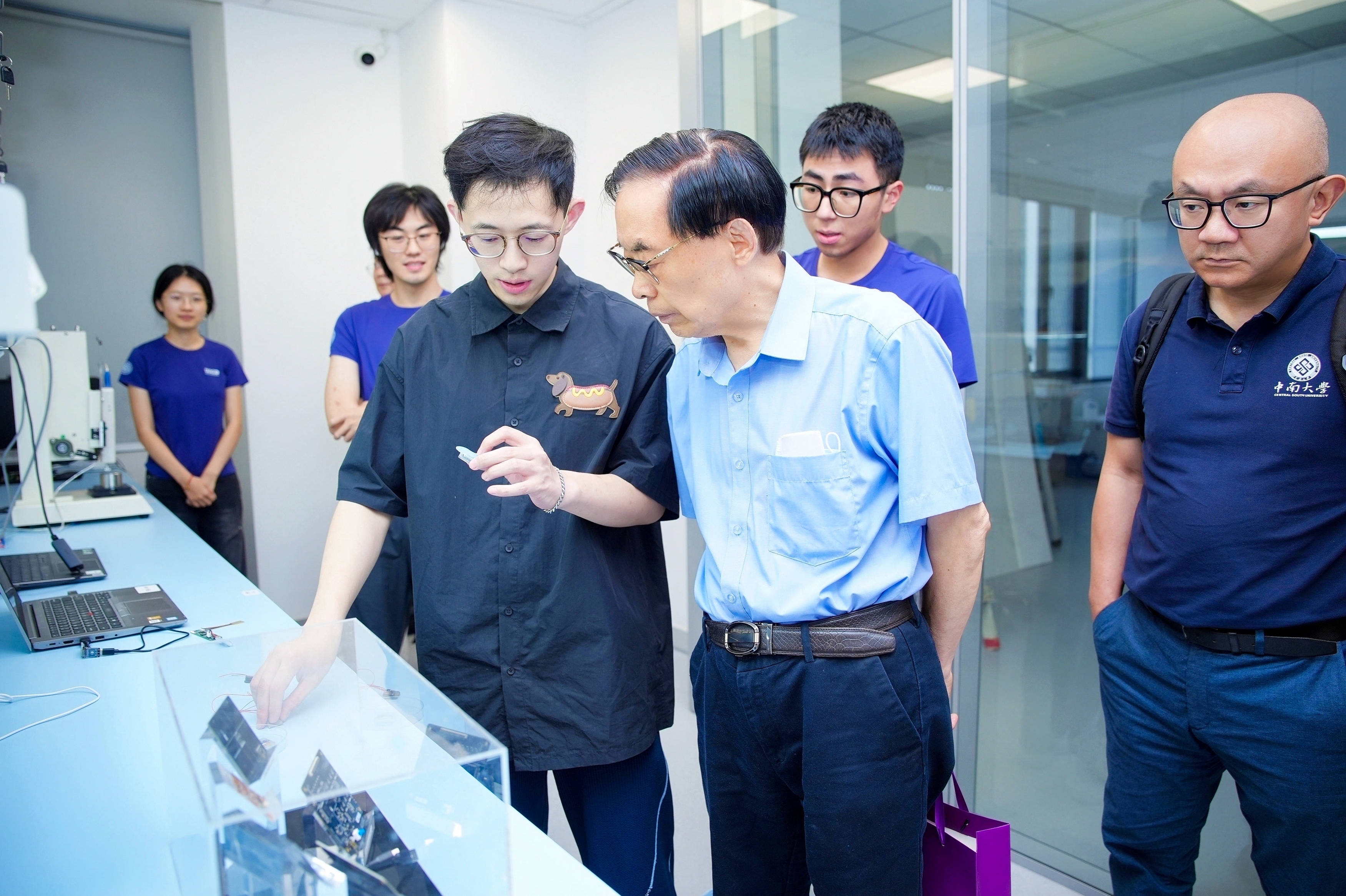
Photo: Visiting experts touring the Joint Research Center experimental platform
After the meeting, participating experts toured the experimental platforms and laboratories of the Joint Research Center. Guided by faculty and students from Professor Pan Tingrui’s team, experts learned about the Center’s research advances in Tactile AI, flexible iontronic sensing, biomedical sensing and intelligent medical devices, and watched live demonstrations of multiple self‑developed technologies. Student teams gave special briefings and on‑site demonstrations covering core technical principles, application scenarios and industrialization prospects. Experts engaged in thorough exchanges with faculty and students on key technical breakthroughs, clinical application requirements and pathways for achievement translation, and fully recognized the Center’s phased accomplishments in interdisciplinary innovation and engineering‑oriented applications.
The establishment of the Tactile AI‑Empowered Joint Research Center constitutes a key initiative for Tsinghua SIGS to deepen industry‑academia‑research integration and support scientific and technological innovation in the Guangdong‑Hong Kong‑Macao Greater Bay Area. Going forward, the Center will focus on cutting‑edge directions including tactile intelligence and iontronic sensing, brain‑computer interfaces and embodied intelligence, as well as intelligent medical devices. It will pool high‑quality resources from home and abroad to drive breakthroughs in core technologies and the translation of research outputs, contributing to the development of artificial intelligence, biomedical engineering and the large‑health industry in China.
Reprinted from the official website of Tsinghua‑Shenzhen International Graduate School